

Several playingcard decks have been enhanced to create what are known as "Fortunteller Decks". Fortuneteller cards are capable of being used for regular playingcard games or read using the conventional playingcard system. However each deck is intended to be used with their own unique fortune telling manuals, which have card interpretations and spread layouts that differ from those of the conventional playingcard system.
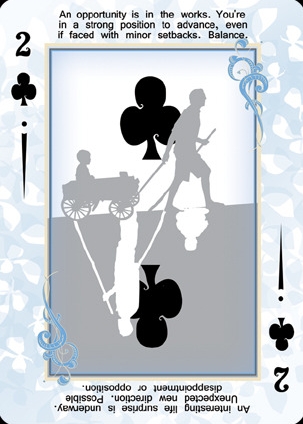 Caravan of See'ers Fortune Telling Playing Cards - (blue version)

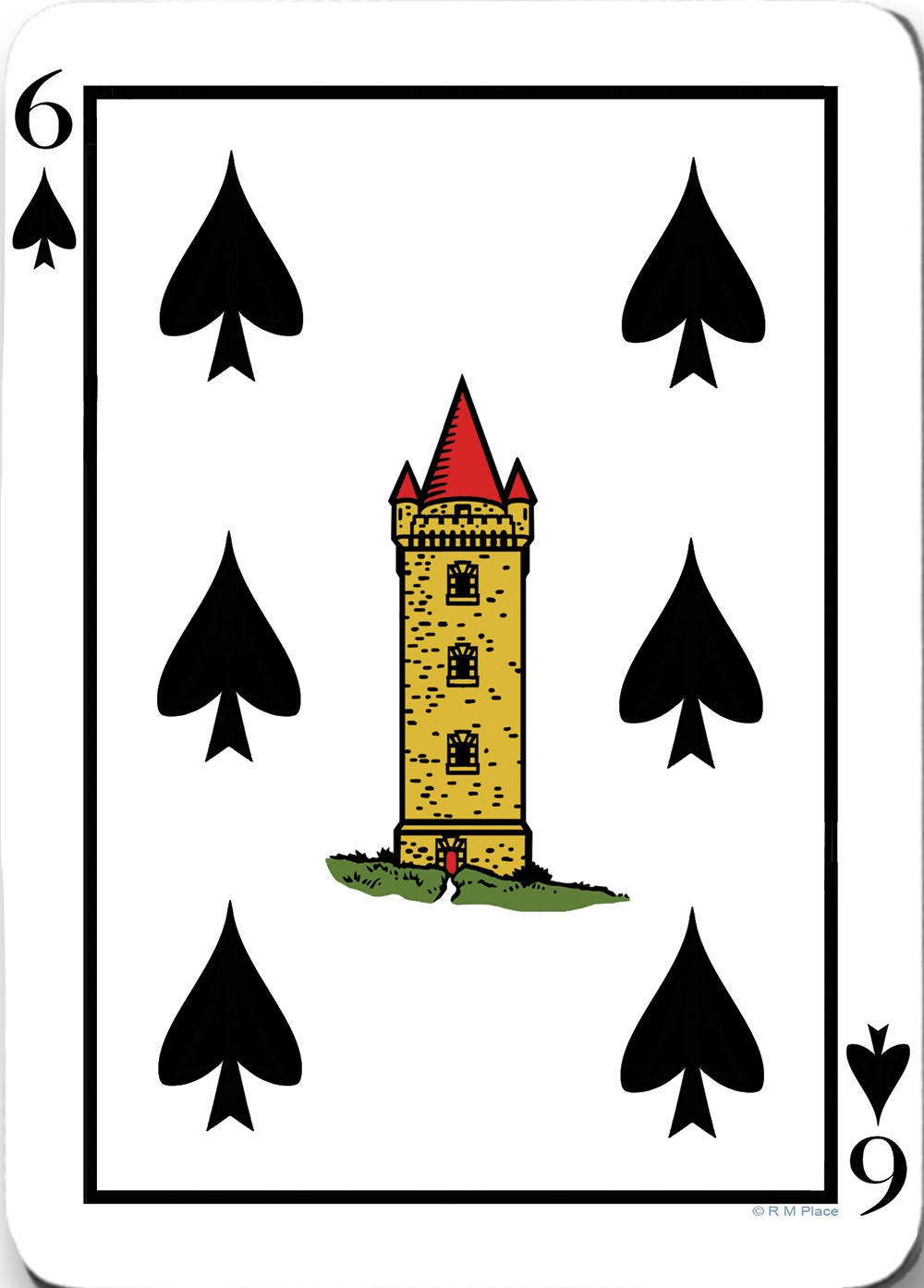 Hermes Playing Card Oracle
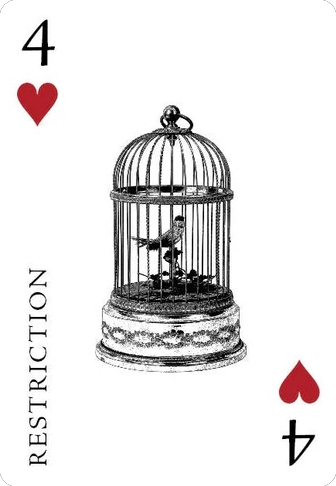 Inner Eye Oracle
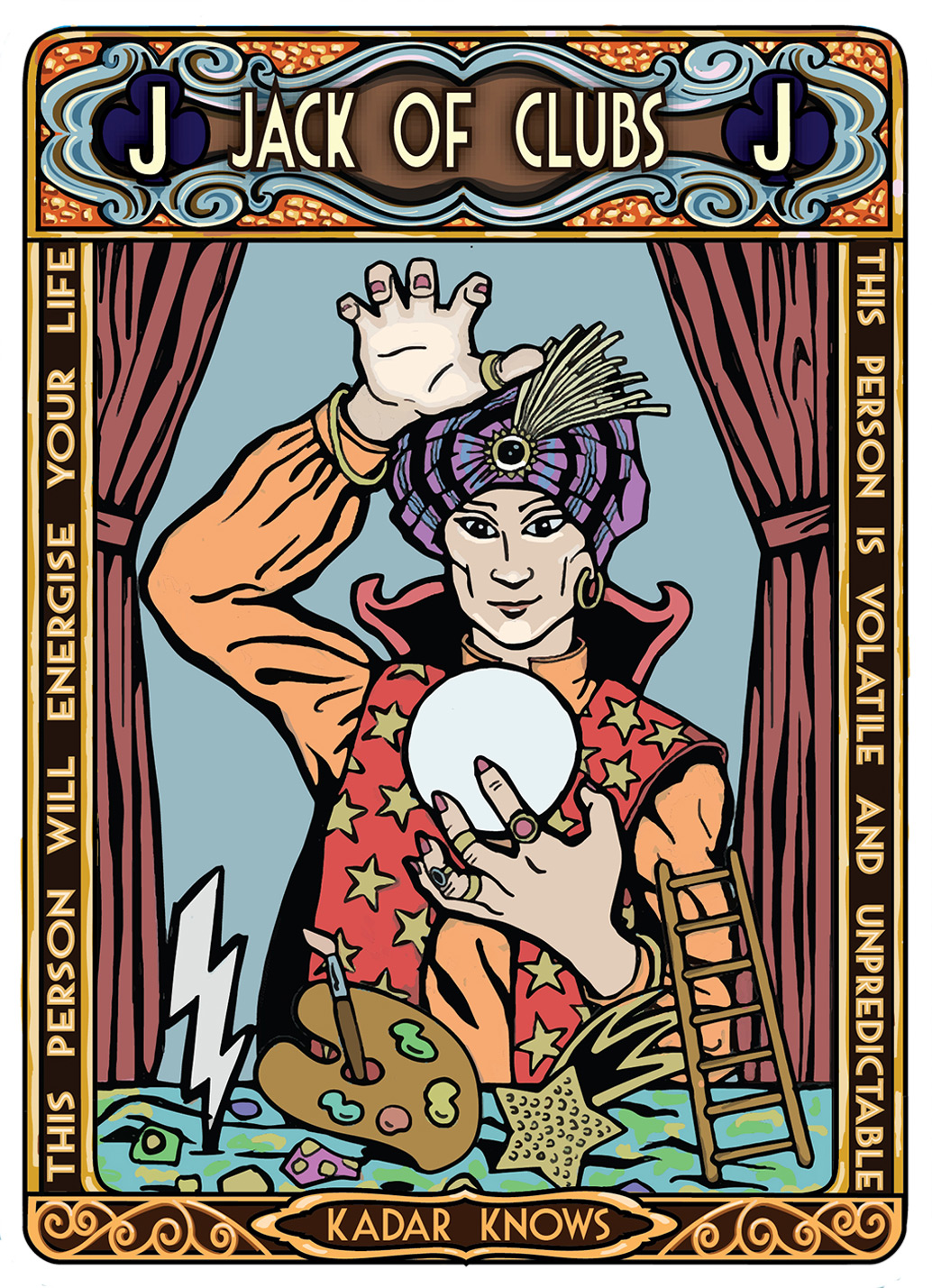 Kadar Fortune Cards
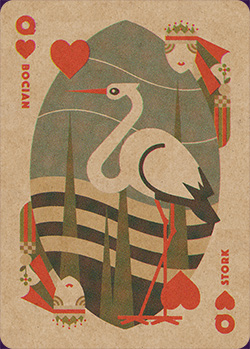 Retroracle
Gong Hee Fot Choy is an interesting playingcard fortune telling variant invented by Margarete Ward, that has been with us now for a century. It is a classic pronouncement oracle, which requires that all the shuffled cards be dealt onto a "House" tableau before reading. It uses a standard playingcard deck, which has been reduced to a 32 card pack by discarding the Twos, Threes, Fours, Fives, Sixes, and any Jokers. Essentially this will create what is known as a "Piquet" pack, which is commonly used to play the German card game of Skat. Most Houses in the tableau use both a cards Suit and Rank for interpretation, but a few Houses use only a cards Suit.
The system originally consisted only of an interpretation manual and an unadorned paper tableau board for laying the playingcards. It was assumed that you would be using your own deck of standard playingcards, but later editions of the manual also included as a bonus a 32 card Piquet deck of Chinese themed playingcards.
Notes about the Card Decks:
The selected card image has no significance other than to exhibit the decks artwork style.
Click on the Flip Through Icon [] to watch a video showing more images of the cards in the deck.
The "Why:" paragraph below the card image is a blurb describing what makes the deck worthy.
Click on the decks Title to preview the user manual that comes with the deck.
Click on the card Image to read a reviewers externally linked comments about the deck.
(reviews/videos were chosen for their illustrative value only, and should not be construed as author/store endorsements)
It should be noted that while the forecasting playingcard meanings for individual cards have varied considerably across time and region, they were never (until just recently) derivatives of either the Tarot Minor Arcana or Lenormand cards. Traditionally, Court cards are uniquely interpreted as indicating persons with differing visual features (lighter hair, darker skin, etc.).
All content appearing on this webpage is FREE for personal use,
being either expressly created or previously posted as anonymously accessible public on the Internet.
No - Signup chicanery, Tracking, Cookies, JavaScript, Merchandising, or Donation solicitations.